一、为什么选择 Netty?

1.1 网络编程的挑战

在现代应用开发中,网络编程面临诸多挑战:

  • 高并发连接:需要同时处理成千上万的连接
  • 低延迟要求:毫秒级的响应时间
  • 复杂协议处理:HTTP、WebSocket、自定义协议
  • 资源管理:内存泄漏、线程池管理
  • 跨平台兼容性:Windows、Linux、macOS

1.2 Netty 的优势

Netty 是一个高性能、异步的网络应用框架,为快速开发可维护的高性能网络服务器和客户端提供了强大支持。

核心优势

  • 🚀 高性能:基于 Java NIO,零拷贝、内存池等优化
  • 🎯 低延迟:事件驱动的异步架构
  • 💪 高并发:单机支持数万甚至数十万连接
  • 🔧 易用性:简洁的 API 设计,丰富的编解码器
  • 🛡️ 稳定性:久经考验,大量知名项目使用

性能表现

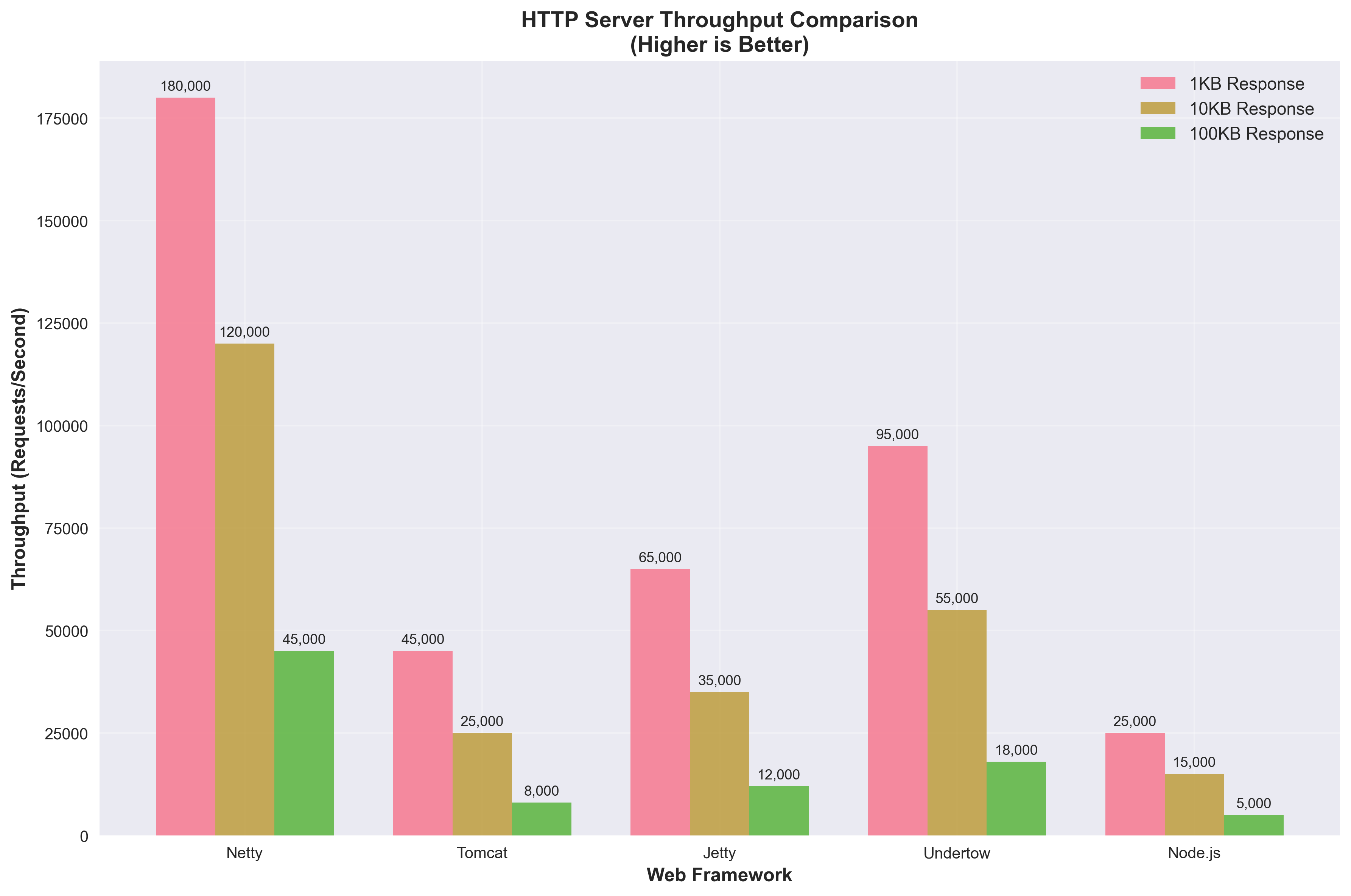
让我们看看 Netty 与其他框架的性能对比:

Netty 吞吐量对比

从上图可以看出,Netty 在各种响应大小下都表现出色,特别是在小数据包场景下性能优势明显。

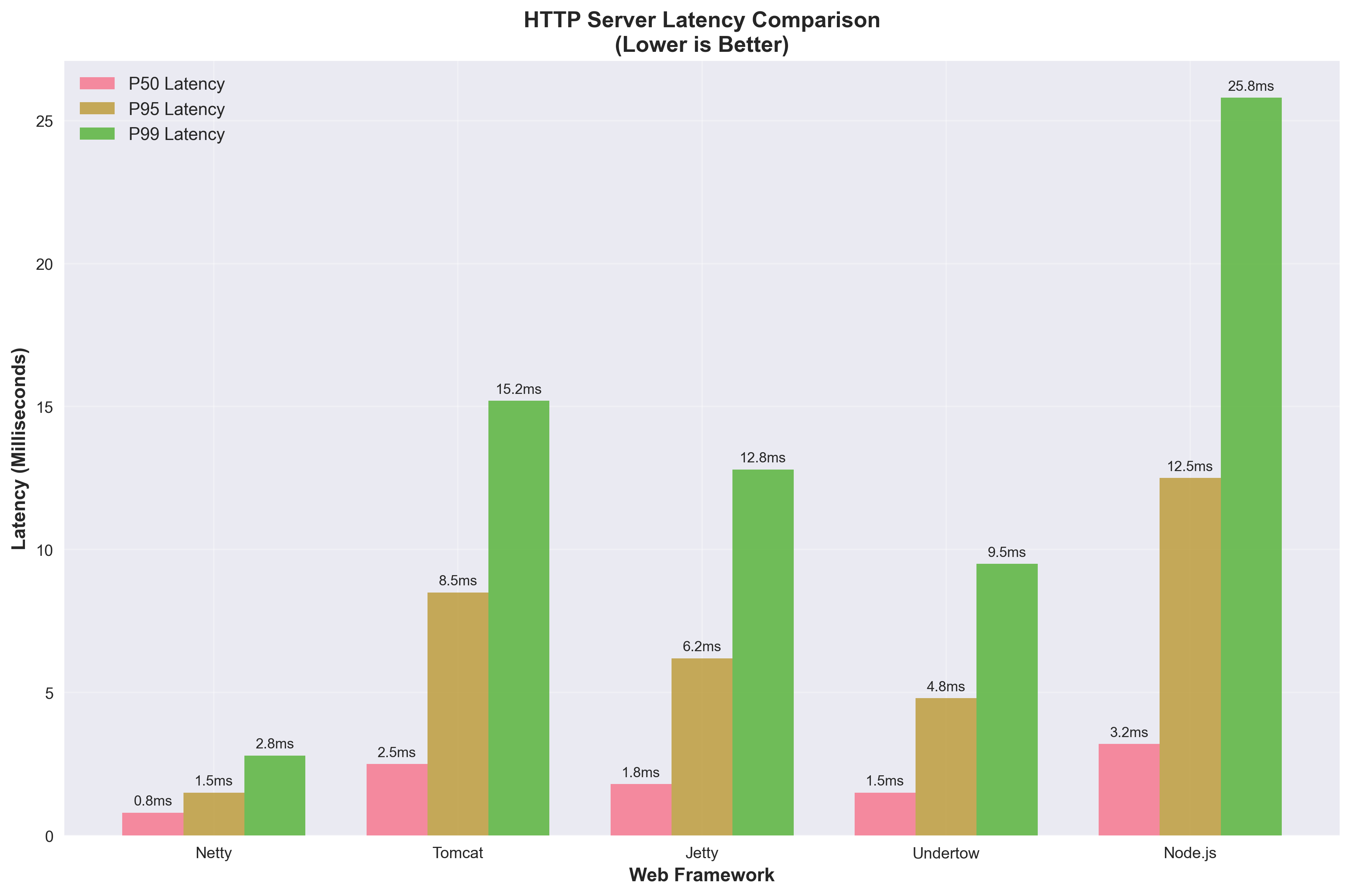
Netty 延迟对比

在延迟方面,Netty 同样表现优异,P99 延迟控制在 3ms 以内。

二、核心概念详解

2.1 EventLoop 和 EventLoopGroup

概念理解

 1
 2
 3
 4
 5
 6
 7
 8
 9
10
11
12
13
14
15
16
17
18
19
20
21
22
23
24
25
26
27
28
29
30
31
// EventLoop 是 Netty 的核心抽象
public class EventLoopExample {
    public static void main(String[] args) {
        // Boss EventLoopGroup:负责接受连接
        EventLoopGroup bossGroup = new NioEventLoopGroup(1);

        // Worker EventLoopGroup:负责处理 I/O 事件
        EventLoopGroup workerGroup = new NioEventLoopGroup();

        try {
            ServerBootstrap b = new ServerBootstrap();
            b.group(bossGroup, workerGroup)
             .channel(NioServerSocketChannel.class)
             .childHandler(new ChannelInitializer<SocketChannel>() {
                 @Override
                 public void initChannel(SocketChannel ch) {
                     // 配置 pipeline
                 }
             });

            System.out.println("Boss EventLoopGroup 线程数: " +
                ((NioEventLoopGroup) bossGroup).executorCount());
            System.out.println("Worker EventLoopGroup 线程数: " +
                ((NioEventLoopGroup) workerGroup).executorCount());

        } finally {
            workerGroup.shutdownGracefully();
            bossGroup.shutdownGracefully();
        }
    }
}

EventLoop 线程模型

 1
 2
 3
 4
 5
 6
 7
 8
 9
10
11
12
13
14
15
16
17
18
19
20
21
22
23
24
25
26
27
28
29
30
31
32
33
34
35
// 自定义 EventLoop 配置
public class EventLoopConfiguration {

    public static EventLoopGroup createOptimizedEventLoopGroup() {
        // 根据 CPU 核数确定线程数
        int threads = Runtime.getRuntime().availableProcessors() * 2;

        return new NioEventLoopGroup(threads, new ThreadFactory() {
            private final AtomicInteger counter = new AtomicInteger(0);

            @Override
            public Thread newThread(Runnable r) {
                Thread thread = new Thread(r);
                thread.setName("Netty-Worker-" + counter.incrementAndGet());
                thread.setDaemon(true);
                // 设置线程优先级
                thread.setPriority(Thread.MAX_PRIORITY);
                return thread;
            }
        });
    }

    // EventLoop 任务调度示例
    public static void scheduleTask(EventLoop eventLoop) {
        // 延迟执行任务
        eventLoop.schedule(() -> {
            System.out.println("延迟任务执行: " + Thread.currentThread().getName());
        }, 5, TimeUnit.SECONDS);

        // 周期性任务
        eventLoop.scheduleAtFixedRate(() -> {
            System.out.println("周期性任务: " + new Date());
        }, 0, 10, TimeUnit.SECONDS);
    }
}

2.2 Channel 和 ChannelHandler

Channel 生命周期

 1
 2
 3
 4
 5
 6
 7
 8
 9
10
11
12
13
14
15
16
17
18
19
20
21
22
23
24
25
26
27
28
29
30
31
32
33
34
35
36
37
38
39
40
41
42
43
44
45
46
47
48
49
50
51
52
53
54
55
56
57
58
59
60
61
62
63
64
65
66
// 自定义 ChannelHandler 演示完整生命周期
public class LifecycleChannelHandler extends ChannelInboundHandlerAdapter {

    @Override
    public void handlerAdded(ChannelHandlerContext ctx) {
        System.out.println("Handler 被添加到 pipeline");
    }

    @Override
    public void channelRegistered(ChannelHandlerContext ctx) {
        System.out.println("Channel 注册到 EventLoop");
    }

    @Override
    public void channelActive(ChannelHandlerContext ctx) {
        System.out.println("Channel 变为活跃状态,可以读写数据");

        // 发送欢迎消息
        String welcomeMsg = "欢迎连接到 Netty 服务器!\n";
        ctx.writeAndFlush(Unpooled.copiedBuffer(welcomeMsg, CharsetUtil.UTF_8));
    }

    @Override
    public void channelRead(ChannelHandlerContext ctx, Object msg) {
        ByteBuf buf = (ByteBuf) msg;
        try {
            String receivedData = buf.toString(CharsetUtil.UTF_8);
            System.out.println("接收到数据: " + receivedData);

            // 回显数据
            String response = "Echo: " + receivedData;
            ctx.writeAndFlush(Unpooled.copiedBuffer(response, CharsetUtil.UTF_8));

        } finally {
            buf.release(); // 重要:释放 ByteBuf
        }
    }

    @Override
    public void channelReadComplete(ChannelHandlerContext ctx) {
        System.out.println("Channel 读取完成");
        ctx.flush(); // 确保数据被发送
    }

    @Override
    public void channelInactive(ChannelHandlerContext ctx) {
        System.out.println("Channel 变为非活跃状态");
    }

    @Override
    public void channelUnregistered(ChannelHandlerContext ctx) {
        System.out.println("Channel 从 EventLoop 注销");
    }

    @Override
    public void handlerRemoved(ChannelHandlerContext ctx) {
        System.out.println("Handler 从 pipeline 移除");
    }

    @Override
    public void exceptionCaught(ChannelHandlerContext ctx, Throwable cause) {
        System.err.println("异常处理: " + cause.getMessage());
        cause.printStackTrace();
        ctx.close(); // 关闭连接
    }
}

ChannelPipeline 深入理解

 1
 2
 3
 4
 5
 6
 7
 8
 9
10
11
12
13
14
15
16
17
18
19
20
21
22
23
24
25
26
27
28
29
30
31
32
33
34
35
36
37
38
39
40
41
42
43
44
45
46
47
48
49
50
51
52
53
54
55
// Pipeline 配置和管理
public class PipelineManager {

    public static void configurePipeline(SocketChannel ch) {
        ChannelPipeline pipeline = ch.pipeline();

        // 1. 日志处理器(最前面)
        pipeline.addFirst("logger", new LoggingHandler(LogLevel.INFO));

        // 2. 空闲检测
        pipeline.addLast("idleState", new IdleStateHandler(30, 0, 0, TimeUnit.SECONDS));

        // 3. 协议解码器
        pipeline.addLast("frameDecoder", new LengthFieldBasedFrameDecoder(1024 * 1024, 0, 4, 0, 4));
        pipeline.addLast("frameEncoder", new LengthFieldPrepender(4));

        // 4. 字符串编解码
        pipeline.addLast("stringDecoder", new StringDecoder(CharsetUtil.UTF_8));
        pipeline.addLast("stringEncoder", new StringEncoder(CharsetUtil.UTF_8));

        // 5. 业务处理器
        pipeline.addLast("businessHandler", new BusinessHandler());

        // 6. 异常处理器(最后面)
        pipeline.addLast("exceptionHandler", new ExceptionHandler());
    }

    // 动态添加处理器
    public static void addSSLHandler(ChannelPipeline pipeline, SslContext sslContext) {
        pipeline.addFirst("ssl", sslContext.newHandler(pipeline.channel().alloc()));
    }

    // 动态移除处理器
    public static void removeHandler(ChannelPipeline pipeline, String name) {
        if (pipeline.get(name) != null) {
            pipeline.remove(name);
        }
    }
}

// 空闲状态处理
class IdleHandler extends ChannelInboundHandlerAdapter {
    @Override
    public void userEventTriggered(ChannelHandlerContext ctx, Object evt) throws Exception {
        if (evt instanceof IdleStateEvent) {
            IdleStateEvent event = (IdleStateEvent) evt;
            if (event.state() == IdleState.READER_IDLE) {
                System.out.println("读空闲,关闭连接");
                ctx.close();
            }
        } else {
            super.userEventTriggered(ctx, evt);
        }
    }
}

2.3 ByteBuf 内存管理

ByteBuf 基础操作

 1
 2
 3
 4
 5
 6
 7
 8
 9
10
11
12
13
14
15
16
17
18
19
20
21
22
23
24
25
26
27
28
29
30
31
32
33
34
35
36
37
38
39
40
41
42
43
44
45
46
47
48
49
50
51
52
53
54
55
56
57
58
59
60
61
62
63
64
65
66
67
68
69
70
71
72
73
74
75
76
77
78
79
80
81
82
83
84
85
// ByteBuf 详细使用示例
public class ByteBufExample {

    public static void basicOperations() {
        // 创建 ByteBuf
        ByteBuf buffer = Unpooled.buffer(256);

        System.out.println("初始状态:");
        printBufferInfo(buffer);

        // 写入数据
        buffer.writeBytes("Hello".getBytes());
        buffer.writeInt(42);
        buffer.writeLong(System.currentTimeMillis());

        System.out.println("写入数据后:");
        printBufferInfo(buffer);

        // 读取数据
        byte[] helloBytes = new byte[5];
        buffer.readBytes(helloBytes);
        int number = buffer.readInt();
        long timestamp = buffer.readLong();

        System.out.println("读取的数据:");
        System.out.println("String: " + new String(helloBytes));
        System.out.println("Int: " + number);
        System.out.println("Long: " + timestamp);

        System.out.println("读取数据后:");
        printBufferInfo(buffer);

        // 重要:释放 ByteBuf
        buffer.release();
    }

    private static void printBufferInfo(ByteBuf buf) {
        System.out.println("readerIndex: " + buf.readerIndex());
        System.out.println("writerIndex: " + buf.writerIndex());
        System.out.println("capacity: " + buf.capacity());
        System.out.println("readableBytes: " + buf.readableBytes());
        System.out.println("writableBytes: " + buf.writableBytes());
        System.out.println("---");
    }

    // 内存池使用
    public static void pooledByteBuf() {
        ByteBufAllocator allocator = PooledByteBufAllocator.DEFAULT;

        // 申请堆内存
        ByteBuf heapBuf = allocator.heapBuffer(256);

        // 申请直接内存(堆外内存)
        ByteBuf directBuf = allocator.directBuffer(256);

        try {
            // 使用缓冲区
            heapBuf.writeBytes("Heap Buffer".getBytes());
            directBuf.writeBytes("Direct Buffer".getBytes());

            System.out.println("Heap Buffer: " + heapBuf.toString(CharsetUtil.UTF_8));
            System.out.println("Direct Buffer: " + directBuf.toString(CharsetUtil.UTF_8));

        } finally {
            // 释放内存
            heapBuf.release();
            directBuf.release();
        }
    }

    // 复合缓冲区
    public static void compositeByteBuf() {
        CompositeByteBuf composite = Unpooled.compositeBuffer();

        ByteBuf header = Unpooled.copiedBuffer("Header", CharsetUtil.UTF_8);
        ByteBuf body = Unpooled.copiedBuffer("Body Content", CharsetUtil.UTF_8);

        // 将多个 ByteBuf 组合
        composite.addComponents(true, header, body);

        System.out.println("Composite Buffer: " + composite.toString(CharsetUtil.UTF_8));

        composite.release();
    }
}

内存泄漏检测

 1
 2
 3
 4
 5
 6
 7
 8
 9
10
11
12
13
14
15
16
17
18
19
20
21
22
23
24
25
26
27
28
29
30
31
32
33
34
35
36
37
38
39
40
41
42
43
44
45
46
47
// 内存泄漏检测配置
public class MemoryLeakDetection {

    static {
        // 设置内存泄漏检测级别
        System.setProperty("io.netty.leakDetection.level", "ADVANCED");
        // 可选值:DISABLED, SIMPLE, ADVANCED, PARANOID
    }

    // 正确的 ByteBuf 使用模式
    public static void correctByteBufUsage(ChannelHandlerContext ctx, Object msg) {
        ByteBuf buf = (ByteBuf) msg;
        try {
            // 处理数据
            String data = buf.toString(CharsetUtil.UTF_8);
            System.out.println("Received: " + data);

            // 创建响应
            ByteBuf response = ctx.alloc().buffer();
            try {
                response.writeBytes("Response".getBytes());
                ctx.writeAndFlush(response);
                response = null; // 防止在 finally 中重复释放
            } finally {
                if (response != null) {
                    response.release();
                }
            }

        } finally {
            buf.release(); // 确保释放输入缓冲区
        }
    }

    // 使用 ReferenceCountUtil 安全释放
    public static void safeByteBufUsage(Object msg) {
        try {
            if (msg instanceof ByteBuf) {
                ByteBuf buf = (ByteBuf) msg;
                String data = buf.toString(CharsetUtil.UTF_8);
                System.out.println("Data: " + data);
            }
        } finally {
            ReferenceCountUtil.release(msg); // 安全释放
        }
    }
}

三、实战入门案例

3.1 Echo 服务器

服务器端实现

  1
  2
  3
  4
  5
  6
  7
  8
  9
 10
 11
 12
 13
 14
 15
 16
 17
 18
 19
 20
 21
 22
 23
 24
 25
 26
 27
 28
 29
 30
 31
 32
 33
 34
 35
 36
 37
 38
 39
 40
 41
 42
 43
 44
 45
 46
 47
 48
 49
 50
 51
 52
 53
 54
 55
 56
 57
 58
 59
 60
 61
 62
 63
 64
 65
 66
 67
 68
 69
 70
 71
 72
 73
 74
 75
 76
 77
 78
 79
 80
 81
 82
 83
 84
 85
 86
 87
 88
 89
 90
 91
 92
 93
 94
 95
 96
 97
 98
 99
100
101
102
103
104
105
106
107
108
109
110
111
112
113
114
115
116
117
118
119
120
// 完整的 Echo 服务器实现
public class EchoServer {
    private final int port;

    public EchoServer(int port) {
        this.port = port;
    }

    public void start() throws InterruptedException {
        EventLoopGroup bossGroup = new NioEventLoopGroup(1);
        EventLoopGroup workerGroup = new NioEventLoopGroup();

        try {
            ServerBootstrap b = new ServerBootstrap();
            b.group(bossGroup, workerGroup)
             .channel(NioServerSocketChannel.class)
             .option(ChannelOption.SO_BACKLOG, 1024)
             .option(ChannelOption.SO_REUSEADDR, true)
             .childOption(ChannelOption.SO_KEEPALIVE, true)
             .childOption(ChannelOption.TCP_NODELAY, true)
             .childOption(ChannelOption.SO_RCVBUF, 32 * 1024)
             .childOption(ChannelOption.SO_SNDBUF, 32 * 1024)
             .handler(new LoggingHandler(LogLevel.INFO))
             .childHandler(new ChannelInitializer<SocketChannel>() {
                 @Override
                 public void initChannel(SocketChannel ch) {
                     ChannelPipeline p = ch.pipeline();

                     // 添加处理器
                     p.addLast(new IdleStateHandler(60, 30, 0, TimeUnit.SECONDS));
                     p.addLast(new EchoServerHandler());
                 }
             });

            // 绑定端口并启动服务器
            ChannelFuture f = b.bind(port).sync();
            System.out.println("Echo Server started on port " + port);

            // 等待服务器 socket 关闭
            f.channel().closeFuture().sync();

        } finally {
            workerGroup.shutdownGracefully();
            bossGroup.shutdownGracefully();
        }
    }

    public static void main(String[] args) throws InterruptedException {
        int port = args.length > 0 ? Integer.parseInt(args[0]) : 8080;
        new EchoServer(port).start();
    }
}

// Echo 服务器处理器
class EchoServerHandler extends ChannelInboundHandlerAdapter {
    private static final AtomicLong connectionCount = new AtomicLong(0);
    private static final AtomicLong messageCount = new AtomicLong(0);

    @Override
    public void channelActive(ChannelHandlerContext ctx) {
        long connections = connectionCount.incrementAndGet();
        System.out.println("Client connected: " + ctx.channel().remoteAddress() +
                          ", Total connections: " + connections);
    }

    @Override
    public void channelInactive(ChannelHandlerContext ctx) {
        long connections = connectionCount.decrementAndGet();
        System.out.println("Client disconnected: " + ctx.channel().remoteAddress() +
                          ", Total connections: " + connections);
    }

    @Override
    public void channelRead(ChannelHandlerContext ctx, Object msg) {
        ByteBuf in = (ByteBuf) msg;
        try {
            String message = in.toString(CharsetUtil.UTF_8);
            long msgCount = messageCount.incrementAndGet();

            System.out.println("Received message #" + msgCount + ": " + message.trim());

            // 构建响应
            String response = "Echo #" + msgCount + ": " + message;
            ByteBuf responseBuffer = Unpooled.copiedBuffer(response, CharsetUtil.UTF_8);

            ctx.writeAndFlush(responseBuffer);

        } finally {
            in.release();
        }
    }

    @Override
    public void userEventTriggered(ChannelHandlerContext ctx, Object evt) throws Exception {
        if (evt instanceof IdleStateEvent) {
            IdleStateEvent event = (IdleStateEvent) evt;
            String eventType = null;
            switch (event.state()) {
                case READER_IDLE:
                    eventType = "读空闲";
                    break;
                case WRITER_IDLE:
                    eventType = "写空闲";
                    break;
                case ALL_IDLE:
                    eventType = "读写空闲";
                    break;
            }
            System.out.println(ctx.channel().remoteAddress() + " 超时事件: " + eventType);
            ctx.channel().close();
        }
    }

    @Override
    public void exceptionCaught(ChannelHandlerContext ctx, Throwable cause) {
        System.err.println("Server exception: " + cause.getMessage());
        cause.printStackTrace();
        ctx.close();
    }
}

客户端实现

 1
 2
 3
 4
 5
 6
 7
 8
 9
10
11
12
13
14
15
16
17
18
19
20
21
22
23
24
25
26
27
28
29
30
31
32
33
34
35
36
37
38
39
40
41
42
43
44
45
46
47
48
49
50
51
52
53
54
55
56
57
58
59
60
61
62
63
64
65
66
67
68
69
70
71
72
73
74
75
76
77
78
79
80
81
82
83
84
85
86
87
88
89
90
91
92
93
94
95
// Echo 客户端实现
public class EchoClient {
    private final String host;
    private final int port;

    public EchoClient(String host, int port) {
        this.host = host;
        this.port = port;
    }

    public void start() throws InterruptedException {
        EventLoopGroup group = new NioEventLoopGroup();

        try {
            Bootstrap b = new Bootstrap();
            b.group(group)
             .channel(NioSocketChannel.class)
             .option(ChannelOption.TCP_NODELAY, true)
             .option(ChannelOption.SO_KEEPALIVE, true)
             .option(ChannelOption.CONNECT_TIMEOUT_MILLIS, 5000)
             .handler(new ChannelInitializer<SocketChannel>() {
                 @Override
                 public void initChannel(SocketChannel ch) {
                     ChannelPipeline p = ch.pipeline();
                     p.addLast(new EchoClientHandler());
                 }
             });

            // 连接服务器
            ChannelFuture f = b.connect(host, port).sync();
            System.out.println("Connected to " + host + ":" + port);

            // 等待连接关闭
            f.channel().closeFuture().sync();

        } finally {
            group.shutdownGracefully();
        }
    }

    public static void main(String[] args) throws InterruptedException {
        String host = args.length > 0 ? args[0] : "localhost";
        int port = args.length > 1 ? Integer.parseInt(args[1]) : 8080;

        new EchoClient(host, port).start();
    }
}

// Echo 客户端处理器
class EchoClientHandler extends ChannelInboundHandlerAdapter {
    private final AtomicInteger messageCounter = new AtomicInteger(0);

    @Override
    public void channelActive(ChannelHandlerContext ctx) {
        System.out.println("Connected to server: " + ctx.channel().remoteAddress());

        // 开始发送消息
        sendMessage(ctx);
    }

    private void sendMessage(ChannelHandlerContext ctx) {
        // 定时发送消息
        ctx.executor().schedule(() -> {
            if (ctx.channel().isActive()) {
                int msgNum = messageCounter.incrementAndGet();
                String message = "Hello Netty! Message #" + msgNum +
                               " at " + new Date() + "\n";

                ByteBuf buffer = Unpooled.copiedBuffer(message, CharsetUtil.UTF_8);
                ctx.writeAndFlush(buffer);

                // 继续发送下一条消息
                sendMessage(ctx);
            }
        }, 2, TimeUnit.SECONDS);
    }

    @Override
    public void channelRead(ChannelHandlerContext ctx, Object msg) {
        ByteBuf in = (ByteBuf) msg;
        try {
            String response = in.toString(CharsetUtil.UTF_8);
            System.out.println("Server response: " + response.trim());
        } finally {
            in.release();
        }
    }

    @Override
    public void exceptionCaught(ChannelHandlerContext ctx, Throwable cause) {
        System.err.println("Client exception: " + cause.getMessage());
        cause.printStackTrace();
        ctx.close();
    }
}

3.2 HTTP 服务器

完整的 HTTP 服务器

  1
  2
  3
  4
  5
  6
  7
  8
  9
 10
 11
 12
 13
 14
 15
 16
 17
 18
 19
 20
 21
 22
 23
 24
 25
 26
 27
 28
 29
 30
 31
 32
 33
 34
 35
 36
 37
 38
 39
 40
 41
 42
 43
 44
 45
 46
 47
 48
 49
 50
 51
 52
 53
 54
 55
 56
 57
 58
 59
 60
 61
 62
 63
 64
 65
 66
 67
 68
 69
 70
 71
 72
 73
 74
 75
 76
 77
 78
 79
 80
 81
 82
 83
 84
 85
 86
 87
 88
 89
 90
 91
 92
 93
 94
 95
 96
 97
 98
 99
100
101
102
103
104
105
106
107
108
109
110
111
112
113
114
115
116
117
118
119
120
121
122
123
124
125
126
127
128
129
130
131
132
133
134
135
136
137
138
139
140
141
142
143
144
145
146
147
148
149
150
// HTTP 服务器实现
public class HttpServer {
    private final int port;

    public HttpServer(int port) {
        this.port = port;
    }

    public void start() throws InterruptedException {
        EventLoopGroup bossGroup = new NioEventLoopGroup(1);
        EventLoopGroup workerGroup = new NioEventLoopGroup();

        try {
            ServerBootstrap b = new ServerBootstrap();
            b.group(bossGroup, workerGroup)
             .channel(NioServerSocketChannel.class)
             .option(ChannelOption.SO_BACKLOG, 1024)
             .childOption(ChannelOption.SO_KEEPALIVE, true)
             .childOption(ChannelOption.TCP_NODELAY, true)
             .childHandler(new HttpServerInitializer());

            ChannelFuture f = b.bind(port).sync();
            System.out.println("HTTP Server started on http://localhost:" + port);

            f.channel().closeFuture().sync();

        } finally {
            workerGroup.shutdownGracefully();
            bossGroup.shutdownGracefully();
        }
    }

    public static void main(String[] args) throws InterruptedException {
        int port = args.length > 0 ? Integer.parseInt(args[0]) : 8080;
        new HttpServer(port).start();
    }
}

// HTTP 服务器初始化器
class HttpServerInitializer extends ChannelInitializer<SocketChannel> {
    @Override
    public void initChannel(SocketChannel ch) {
        ChannelPipeline pipeline = ch.pipeline();

        // HTTP 编解码器
        pipeline.addLast(new HttpServerCodec());

        // HTTP 对象聚合器
        pipeline.addLast(new HttpObjectAggregator(65536));

        // HTTP 内容压缩
        pipeline.addLast(new HttpContentCompressor());

        // 自定义业务处理器
        pipeline.addLast(new HttpServerHandler());
    }
}

// HTTP 服务器处理器
class HttpServerHandler extends ChannelInboundHandlerAdapter {
    private static final Map<String, String> routes = new HashMap<>();
    private static final AtomicLong requestCount = new AtomicLong(0);

    static {
        // 配置路由
        routes.put("/", "Welcome to Netty HTTP Server!");
        routes.put("/hello", "Hello, World!");
        routes.put("/time", "Current time: " + new Date());
        routes.put("/stats", "Request count: ");
    }

    @Override
    public void channelRead(ChannelHandlerContext ctx, Object msg) {
        if (msg instanceof FullHttpRequest) {
            FullHttpRequest request = (FullHttpRequest) msg;

            long count = requestCount.incrementAndGet();
            String uri = request.uri();
            HttpMethod method = request.method();

            System.out.println("Request #" + count + ": " + method + " " + uri);

            // 处理请求
            handleHttpRequest(ctx, request, count);
        }
    }

    private void handleHttpRequest(ChannelHandlerContext ctx, FullHttpRequest request, long count) {
        String uri = request.uri();
        String responseContent;
        HttpResponseStatus status = HttpResponseStatus.OK;

        // 路由处理
        if (routes.containsKey(uri)) {
            responseContent = routes.get(uri);
            if (uri.equals("/stats")) {
                responseContent += count;
            }
        } else if (uri.equals("/api/echo")) {
            // API 接口:回显请求体
            ByteBuf content = request.content();
            responseContent = "Echo: " + content.toString(CharsetUtil.UTF_8);
        } else if (uri.startsWith("/api/user/")) {
            // RESTful API 示例
            String userId = uri.substring("/api/user/".length());
            responseContent = "{\"userId\": \"" + userId + "\", \"name\": \"User " + userId + "\"}";
        } else {
            // 404 处理
            responseContent = "404 Not Found: " + uri;
            status = HttpResponseStatus.NOT_FOUND;
        }

        // 构建 HTTP 响应
        sendHttpResponse(ctx, request, responseContent, status);
    }

    private void sendHttpResponse(ChannelHandlerContext ctx, FullHttpRequest request,
                                 String content, HttpResponseStatus status) {

        ByteBuf responseContent = Unpooled.copiedBuffer(content, CharsetUtil.UTF_8);

        FullHttpResponse response = new DefaultFullHttpResponse(
            HttpVersion.HTTP_1_1, status, responseContent);

        // 设置响应头
        response.headers().set(HttpHeaderNames.CONTENT_TYPE, "text/plain; charset=UTF-8");
        response.headers().set(HttpHeaderNames.CONTENT_LENGTH, responseContent.readableBytes());
        response.headers().set(HttpHeaderNames.SERVER, "Netty/4.1");
        response.headers().set(HttpHeaderNames.DATE, new Date());

        // 处理 Keep-Alive
        boolean keepAlive = HttpUtil.isKeepAlive(request);
        if (keepAlive) {
            response.headers().set(HttpHeaderNames.CONNECTION, HttpHeaderValues.KEEP_ALIVE);
        }

        // 发送响应
        ChannelFuture future = ctx.writeAndFlush(response);

        if (!keepAlive) {
            future.addListener(ChannelFutureListener.CLOSE);
        }
    }

    @Override
    public void exceptionCaught(ChannelHandlerContext ctx, Throwable cause) {
        System.err.println("HTTP Server exception: " + cause.getMessage());
        ctx.close();
    }
}

3.3 WebSocket 服务器

  1
  2
  3
  4
  5
  6
  7
  8
  9
 10
 11
 12
 13
 14
 15
 16
 17
 18
 19
 20
 21
 22
 23
 24
 25
 26
 27
 28
 29
 30
 31
 32
 33
 34
 35
 36
 37
 38
 39
 40
 41
 42
 43
 44
 45
 46
 47
 48
 49
 50
 51
 52
 53
 54
 55
 56
 57
 58
 59
 60
 61
 62
 63
 64
 65
 66
 67
 68
 69
 70
 71
 72
 73
 74
 75
 76
 77
 78
 79
 80
 81
 82
 83
 84
 85
 86
 87
 88
 89
 90
 91
 92
 93
 94
 95
 96
 97
 98
 99
100
101
102
103
104
105
106
107
108
// WebSocket 服务器实现
public class WebSocketServer {
    private final int port;

    public WebSocketServer(int port) {
        this.port = port;
    }

    public void start() throws InterruptedException {
        EventLoopGroup bossGroup = new NioEventLoopGroup(1);
        EventLoopGroup workerGroup = new NioEventLoopGroup();

        try {
            ServerBootstrap b = new ServerBootstrap();
            b.group(bossGroup, workerGroup)
             .channel(NioServerSocketChannel.class)
             .childHandler(new WebSocketServerInitializer());

            ChannelFuture f = b.bind(port).sync();
            System.out.println("WebSocket Server started on ws://localhost:" + port + "/websocket");

            f.channel().closeFuture().sync();

        } finally {
            workerGroup.shutdownGracefully();
            bossGroup.shutdownGracefully();
        }
    }

    public static void main(String[] args) throws InterruptedException {
        int port = args.length > 0 ? Integer.parseInt(args[0]) : 8080;
        new WebSocketServer(port).start();
    }
}

// WebSocket 服务器初始化器
class WebSocketServerInitializer extends ChannelInitializer<SocketChannel> {
    @Override
    public void initChannel(SocketChannel ch) {
        ChannelPipeline pipeline = ch.pipeline();

        pipeline.addLast(new HttpServerCodec());
        pipeline.addLast(new HttpObjectAggregator(65536));
        pipeline.addLast(new WebSocketServerProtocolHandler("/websocket", null, true));
        pipeline.addLast(new WebSocketServerHandler());
    }
}

// WebSocket 处理器
class WebSocketServerHandler extends SimpleChannelInboundHandler<WebSocketFrame> {
    private static final Set<Channel> channels = ConcurrentHashMap.newKeySet();

    @Override
    public void channelActive(ChannelHandlerContext ctx) {
        channels.add(ctx.channel());
        System.out.println("WebSocket client connected: " + ctx.channel().remoteAddress());
        System.out.println("Total clients: " + channels.size());
    }

    @Override
    public void channelInactive(ChannelHandlerContext ctx) {
        channels.remove(ctx.channel());
        System.out.println("WebSocket client disconnected: " + ctx.channel().remoteAddress());
        System.out.println("Total clients: " + channels.size());
    }

    @Override
    protected void channelRead0(ChannelHandlerContext ctx, WebSocketFrame frame) {
        if (frame instanceof TextWebSocketFrame) {
            // 处理文本消息
            String text = ((TextWebSocketFrame) frame).text();
            System.out.println("Received: " + text);

            // 广播消息给所有客户端
            String response = "Server Echo: " + text + " (Clients: " + channels.size() + ")";
            TextWebSocketFrame responseFrame = new TextWebSocketFrame(response);

            // 广播给所有连接的客户端
            for (Channel channel : channels) {
                if (channel.isActive()) {
                    channel.writeAndFlush(responseFrame.retainedDuplicate());
                }
            }

        } else if (frame instanceof BinaryWebSocketFrame) {
            // 处理二进制消息
            ByteBuf content = frame.content();
            System.out.println("Received binary data: " + content.readableBytes() + " bytes");

            // 回显二进制数据
            ctx.writeAndFlush(new BinaryWebSocketFrame(content.retain()));

        } else if (frame instanceof PingWebSocketFrame) {
            // 处理 Ping 帧
            ctx.writeAndFlush(new PongWebSocketFrame(frame.content().retain()));

        } else if (frame instanceof CloseWebSocketFrame) {
            // 处理关闭帧
            ctx.close();
        }
    }

    @Override
    public void exceptionCaught(ChannelHandlerContext ctx, Throwable cause) {
        System.err.println("WebSocket exception: " + cause.getMessage());
        ctx.close();
    }
}

四、性能分析与优化

4.1 性能基准测试

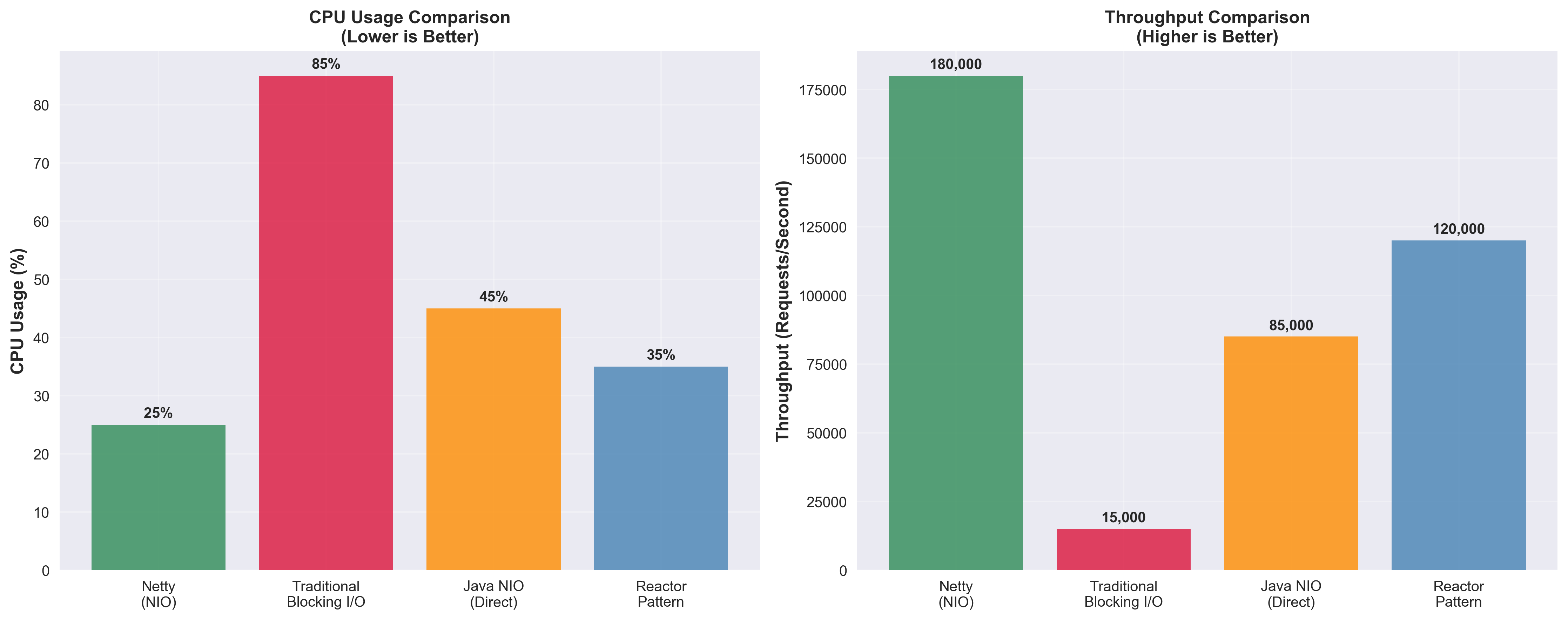
让我们看看 Netty 在不同场景下的性能表现:

I/O 模型对比

从图中可以看出,Netty 的 NIO 模型在 CPU 使用率和吞吐量之间取得了很好的平衡。

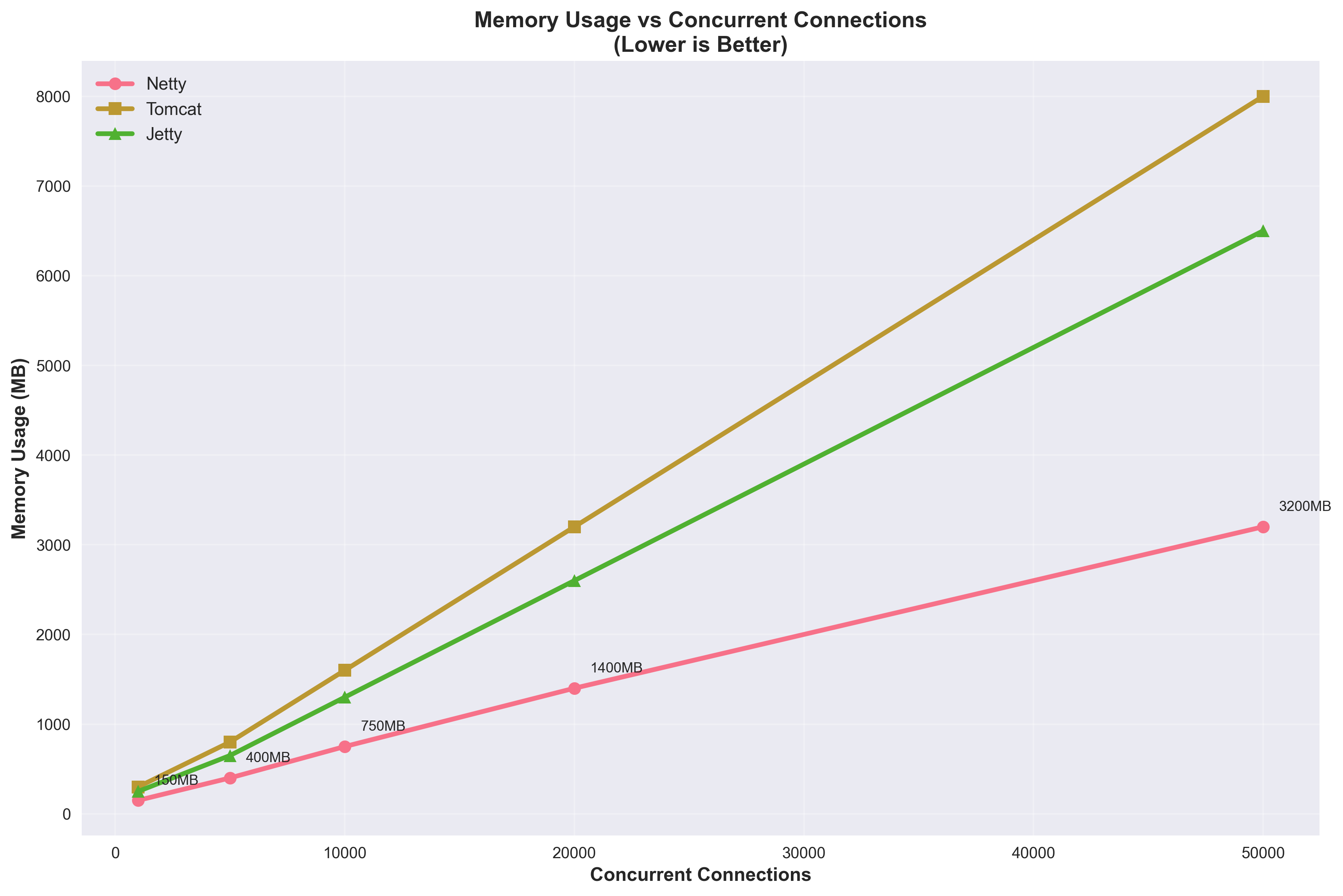
内存使用对比

在内存使用方面,Netty 表现出色,即使在高并发场景下也能保持较低的内存占用。

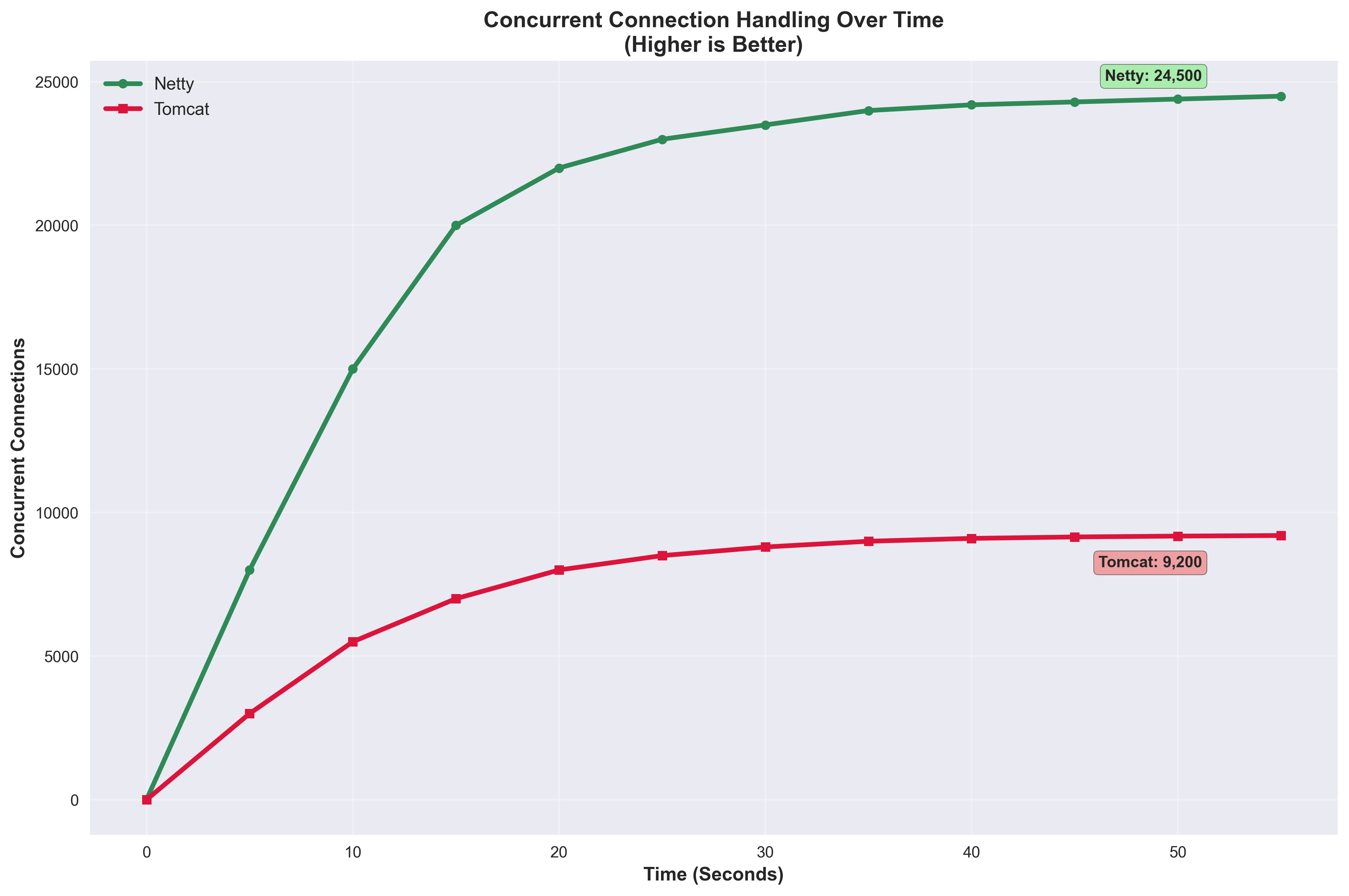
并发连接处理

Netty 在处理并发连接方面表现优异,能够快速建立大量连接并保持稳定。

4.2 性能优化技巧

JVM 优化

 1
 2
 3
 4
 5
 6
 7
 8
 9
10
11
12
13
14
15
16
# Netty 服务器 JVM 优化参数
java -server \
     -Xms4g -Xmx4g \
     -XX:+UseG1GC \
     -XX:MaxGCPauseMillis=200 \
     -XX:+UnlockExperimentalVMOptions \
     -XX:+UseZGC \
     -XX:+DisableExplicitGC \
     -XX:+HeapDumpOnOutOfMemoryError \
     -XX:HeapDumpPath=/tmp/netty-heapdump.hprof \
     -Dio.netty.leakDetection.level=SIMPLE \
     -Dio.netty.allocator.type=pooled \
     -Dio.netty.allocator.numDirectArenas=32 \
     -Dio.netty.allocator.numHeapArenas=32 \
     -Dio.netty.recycler.maxCapacityPerThread=0 \
     -cp your-app.jar com.example.NettyServer

代码优化

 1
 2
 3
 4
 5
 6
 7
 8
 9
10
11
12
13
14
15
16
17
18
19
20
21
22
23
24
25
26
27
28
29
30
31
32
33
34
35
36
37
38
39
40
41
42
43
44
45
46
47
48
49
50
51
52
53
54
55
56
57
58
59
60
61
62
63
64
65
66
67
68
69
70
71
72
73
74
75
76
77
78
79
80
81
// Netty 性能优化配置
public class NettyPerformanceOptimization {

    public static ServerBootstrap createOptimizedServer() {
        // 创建优化的 EventLoopGroup
        EventLoopGroup bossGroup = new NioEventLoopGroup(1,
            new DefaultThreadFactory("NettyBoss", true));
        EventLoopGroup workerGroup = new NioEventLoopGroup(
            Runtime.getRuntime().availableProcessors() * 2,
            new DefaultThreadFactory("NettyWorker", true));

        ServerBootstrap bootstrap = new ServerBootstrap();
        bootstrap.group(bossGroup, workerGroup)
                .channel(NioServerSocketChannel.class)
                // 网络层优化
                .option(ChannelOption.SO_BACKLOG, 1024)
                .option(ChannelOption.SO_REUSEADDR, true)
                .childOption(ChannelOption.SO_KEEPALIVE, true)
                .childOption(ChannelOption.TCP_NODELAY, true)
                .childOption(ChannelOption.SO_RCVBUF, 32 * 1024)
                .childOption(ChannelOption.SO_SNDBUF, 32 * 1024)
                // 内存优化
                .childOption(ChannelOption.ALLOCATOR, PooledByteBufAllocator.DEFAULT)
                .childOption(ChannelOption.RCVBUF_ALLOCATOR,
                    new AdaptiveRecvByteBufAllocator(64, 1024, 65536))
                // 写缓冲区优化
                .childOption(ChannelOption.WRITE_BUFFER_WATER_MARK,
                    new WriteBufferWaterMark(8 * 1024, 32 * 1024));

        return bootstrap;
    }

    // 高性能编解码器
    public static class OptimizedStringDecoder extends MessageToMessageDecoder<ByteBuf> {
        private final Charset charset;

        public OptimizedStringDecoder(Charset charset) {
            this.charset = charset;
        }

        @Override
        protected void decode(ChannelHandlerContext ctx, ByteBuf msg, List<Object> out) {
            // 零拷贝字符串解码
            out.add(msg.toString(charset));
        }
    }

    // 批量写优化
    public static class BatchedWriteHandler extends ChannelOutboundHandlerAdapter {
        private final List<Object> pendingWrites = new ArrayList<>();
        private final int batchSize;

        public BatchedWriteHandler(int batchSize) {
            this.batchSize = batchSize;
        }

        @Override
        public void write(ChannelHandlerContext ctx, Object msg, ChannelPromise promise) {
            pendingWrites.add(msg);

            if (pendingWrites.size() >= batchSize) {
                flushBatch(ctx);
            }
        }

        @Override
        public void flush(ChannelHandlerContext ctx) {
            if (!pendingWrites.isEmpty()) {
                flushBatch(ctx);
            }
            ctx.flush();
        }

        private void flushBatch(ChannelHandlerContext ctx) {
            for (Object msg : pendingWrites) {
                ctx.write(msg);
            }
            pendingWrites.clear();
        }
    }
}

操作系统优化

 1
 2
 3
 4
 5
 6
 7
 8
 9
10
11
12
13
14
# Linux 系统优化配置
echo 'net.core.rmem_max = 134217728' >> /etc/sysctl.conf
echo 'net.core.wmem_max = 134217728' >> /etc/sysctl.conf
echo 'net.ipv4.tcp_rmem = 4096 16384 134217728' >> /etc/sysctl.conf
echo 'net.ipv4.tcp_wmem = 4096 16384 134217728' >> /etc/sysctl.conf
echo 'net.core.netdev_max_backlog = 5000' >> /etc/sysctl.conf
echo 'net.ipv4.tcp_congestion_control = bbr' >> /etc/sysctl.conf

# 文件描述符限制
echo '* soft nofile 1000000' >> /etc/security/limits.conf
echo '* hard nofile 1000000' >> /etc/security/limits.conf

# 应用配置
sysctl -p

4.3 监控和调试

性能监控

 1
 2
 3
 4
 5
 6
 7
 8
 9
10
11
12
13
14
15
16
17
18
19
20
21
22
23
24
25
26
27
28
29
30
31
32
33
34
35
36
37
38
39
40
41
42
43
44
45
46
47
48
49
50
51
52
53
54
55
56
// Netty 性能监控
public class NettyMonitor {
    private static final MeterRegistry registry = Metrics.globalRegistry;
    private static final Timer requestTimer = Timer.builder("netty.request.duration")
            .register(registry);
    private static final Counter connectionCounter = Counter.builder("netty.connections.total")
            .register(registry);

    // 监控处理器
    public static class MonitoringHandler extends ChannelInboundHandlerAdapter {
        @Override
        public void channelActive(ChannelHandlerContext ctx) {
            connectionCounter.increment();
            super.channelActive(ctx);
        }

        @Override
        public void channelRead(ChannelHandlerContext ctx, Object msg) {
            Timer.Sample sample = Timer.start(registry);

            try {
                super.channelRead(ctx, msg);
            } finally {
                sample.stop(requestTimer);
            }
        }

        @Override
        public void exceptionCaught(ChannelHandlerContext ctx, Throwable cause) {
            Counter.builder("netty.errors.total")
                    .tag("error.type", cause.getClass().getSimpleName())
                    .register(registry)
                    .increment();

            super.exceptionCaught(ctx, cause);
        }
    }

    // 定期输出监控指标
    public static void startMetricsReporting() {
        ScheduledExecutorService scheduler = Executors.newScheduledThreadPool(1);

        scheduler.scheduleAtFixedRate(() -> {
            System.out.println("=== Netty Metrics ===");
            System.out.println("Total connections: " + connectionCounter.count());
            System.out.println("Request rate: " + requestTimer.count() + " req/s");
            System.out.println("Average latency: " +
                requestTimer.mean(TimeUnit.MILLISECONDS) + " ms");
            System.out.println("P95 latency: " +
                requestTimer.percentile(0.95, TimeUnit.MILLISECONDS) + " ms");
            System.out.println("P99 latency: " +
                requestTimer.percentile(0.99, TimeUnit.MILLISECONDS) + " ms");

        }, 0, 30, TimeUnit.SECONDS);
    }
}

五、高级特性

5.1 自定义协议

  1
  2
  3
  4
  5
  6
  7
  8
  9
 10
 11
 12
 13
 14
 15
 16
 17
 18
 19
 20
 21
 22
 23
 24
 25
 26
 27
 28
 29
 30
 31
 32
 33
 34
 35
 36
 37
 38
 39
 40
 41
 42
 43
 44
 45
 46
 47
 48
 49
 50
 51
 52
 53
 54
 55
 56
 57
 58
 59
 60
 61
 62
 63
 64
 65
 66
 67
 68
 69
 70
 71
 72
 73
 74
 75
 76
 77
 78
 79
 80
 81
 82
 83
 84
 85
 86
 87
 88
 89
 90
 91
 92
 93
 94
 95
 96
 97
 98
 99
100
101
102
103
104
105
106
107
108
109
110
111
112
113
114
115
116
117
118
119
120
121
// 自定义协议实现
public class CustomProtocol {

    // 协议格式:[4字节长度][1字节类型][数据]
    public static class CustomMessage {
        private final byte type;
        private final byte[] data;

        public CustomMessage(byte type, byte[] data) {
            this.type = type;
            this.data = data;
        }

        // getter 方法
        public byte getType() { return type; }
        public byte[] getData() { return data; }
        public int getLength() { return 1 + (data != null ? data.length : 0); }
    }

    // 自定义协议编码器
    public static class CustomProtocolEncoder extends MessageToByteEncoder<CustomMessage> {
        @Override
        protected void encode(ChannelHandlerContext ctx, CustomMessage msg, ByteBuf out) {
            // 写入长度(4字节)
            out.writeInt(msg.getLength());
            // 写入类型(1字节)
            out.writeByte(msg.getType());
            // 写入数据
            if (msg.getData() != null) {
                out.writeBytes(msg.getData());
            }
        }
    }

    // 自定义协议解码器
    public static class CustomProtocolDecoder extends LengthFieldBasedFrameDecoder {
        public CustomProtocolDecoder() {
            super(1024 * 1024, 0, 4, 0, 4);
        }

        @Override
        protected Object decode(ChannelHandlerContext ctx, ByteBuf in) throws Exception {
            ByteBuf frame = (ByteBuf) super.decode(ctx, in);
            if (frame == null) {
                return null;
            }

            try {
                byte type = frame.readByte();
                byte[] data = new byte[frame.readableBytes()];
                frame.readBytes(data);

                return new CustomMessage(type, data);
            } finally {
                frame.release();
            }
        }
    }

    // 协议处理器
    public static class CustomProtocolHandler extends SimpleChannelInboundHandler<CustomMessage> {
        @Override
        protected void channelRead0(ChannelHandlerContext ctx, CustomMessage msg) {
            byte type = msg.getType();
            byte[] data = msg.getData();

            switch (type) {
                case 0x01: // 心跳
                    handleHeartbeat(ctx);
                    break;
                case 0x02: // 数据传输
                    handleDataTransfer(ctx, data);
                    break;
                case 0x03: // 控制命令
                    handleControlCommand(ctx, data);
                    break;
                default:
                    System.err.println("Unknown message type: " + type);
            }
        }

        private void handleHeartbeat(ChannelHandlerContext ctx) {
            // 回复心跳
            CustomMessage pong = new CustomMessage((byte) 0x01, "PONG".getBytes());
            ctx.writeAndFlush(pong);
        }

        private void handleDataTransfer(ChannelHandlerContext ctx, byte[] data) {
            String dataStr = new String(data, CharsetUtil.UTF_8);
            System.out.println("Received data: " + dataStr);

            // 回复确认
            CustomMessage ack = new CustomMessage((byte) 0x04, "ACK".getBytes());
            ctx.writeAndFlush(ack);
        }

        private void handleControlCommand(ChannelHandlerContext ctx, byte[] data) {
            String command = new String(data, CharsetUtil.UTF_8);
            System.out.println("Received command: " + command);

            // 执行命令并回复结果
            String result = executeCommand(command);
            CustomMessage response = new CustomMessage((byte) 0x05, result.getBytes());
            ctx.writeAndFlush(response);
        }

        private String executeCommand(String command) {
            // 简单的命令处理示例
            switch (command.toLowerCase()) {
                case "status":
                    return "Server is running";
                case "time":
                    return new Date().toString();
                case "shutdown":
                    return "Shutdown initiated";
                default:
                    return "Unknown command: " + command;
            }
        }
    }
}

5.2 SSL/TLS 支持

 1
 2
 3
 4
 5
 6
 7
 8
 9
10
11
12
13
14
15
16
17
18
19
20
21
22
23
24
25
26
27
28
29
30
31
32
33
34
35
36
37
38
39
40
41
42
43
44
45
46
47
48
49
50
51
52
53
54
55
56
57
58
59
60
61
62
// SSL/TLS 配置
public class SSLNettyServer {

    public static SslContext createSSLContext() throws Exception {
        // 创建自签名证书(仅用于测试)
        SelfSignedCertificate ssc = new SelfSignedCertificate();

        return SslContextBuilder.forServer(ssc.certificate(), ssc.privateKey())
                .sslProvider(SslProvider.OPENSSL) // 使用 OpenSSL(性能更好)
                .ciphers(Http2SecurityUtil.CIPHERS, SupportedCipherSuiteFilter.INSTANCE)
                .applicationProtocolConfig(new ApplicationProtocolConfig(
                    ApplicationProtocolConfig.Protocol.ALPN,
                    ApplicationProtocolConfig.SelectorFailureBehavior.NO_ADVERTISE,
                    ApplicationProtocolConfig.SelectedListenerFailureBehavior.ACCEPT,
                    ApplicationProtocolNames.HTTP_2,
                    ApplicationProtocolNames.HTTP_1_1))
                .build();
    }

    // SSL 初始化器
    public static class SSLChannelInitializer extends ChannelInitializer<SocketChannel> {
        private final SslContext sslContext;

        public SSLChannelInitializer(SslContext sslContext) {
            this.sslContext = sslContext;
        }

        @Override
        protected void initChannel(SocketChannel ch) throws Exception {
            ChannelPipeline pipeline = ch.pipeline();

            // 添加 SSL 处理器(必须是第一个)
            pipeline.addLast(sslContext.newHandler(ch.alloc()));

            // 添加其他处理器
            pipeline.addLast(new HttpServerCodec());
            pipeline.addLast(new HttpObjectAggregator(65536));
            pipeline.addLast(new HttpsServerHandler());
        }
    }

    // HTTPS 处理器
    public static class HttpsServerHandler extends SimpleChannelInboundHandler<FullHttpRequest> {
        @Override
        protected void channelRead0(ChannelHandlerContext ctx, FullHttpRequest request) {
            String uri = request.uri();

            // 构建 HTTPS 响应
            String responseContent = "HTTPS Response for: " + uri + "\nSecure: true\n";
            ByteBuf content = Unpooled.copiedBuffer(responseContent, CharsetUtil.UTF_8);

            FullHttpResponse response = new DefaultFullHttpResponse(
                HttpVersion.HTTP_1_1, HttpResponseStatus.OK, content);

            response.headers().set(HttpHeaderNames.CONTENT_TYPE, "text/plain");
            response.headers().set(HttpHeaderNames.CONTENT_LENGTH, content.readableBytes());
            response.headers().set("Strict-Transport-Security", "max-age=31536000");

            ctx.writeAndFlush(response).addListener(ChannelFutureListener.CLOSE);
        }
    }
}

5.3 HTTP/2 支持

  1
  2
  3
  4
  5
  6
  7
  8
  9
 10
 11
 12
 13
 14
 15
 16
 17
 18
 19
 20
 21
 22
 23
 24
 25
 26
 27
 28
 29
 30
 31
 32
 33
 34
 35
 36
 37
 38
 39
 40
 41
 42
 43
 44
 45
 46
 47
 48
 49
 50
 51
 52
 53
 54
 55
 56
 57
 58
 59
 60
 61
 62
 63
 64
 65
 66
 67
 68
 69
 70
 71
 72
 73
 74
 75
 76
 77
 78
 79
 80
 81
 82
 83
 84
 85
 86
 87
 88
 89
 90
 91
 92
 93
 94
 95
 96
 97
 98
 99
100
101
102
103
104
105
106
107
108
109
110
111
112
113
114
115
116
// HTTP/2 服务器实现
public class Http2Server {

    public static void main(String[] args) throws Exception {
        SslContext sslCtx = createHttp2SSLContext();

        EventLoopGroup bossGroup = new NioEventLoopGroup(1);
        EventLoopGroup workerGroup = new NioEventLoopGroup();

        try {
            ServerBootstrap b = new ServerBootstrap();
            b.group(bossGroup, workerGroup)
             .channel(NioServerSocketChannel.class)
             .childHandler(new Http2ServerInitializer(sslCtx));

            ChannelFuture f = b.bind(8443).sync();
            System.out.println("HTTP/2 Server started on https://localhost:8443");

            f.channel().closeFuture().sync();

        } finally {
            workerGroup.shutdownGracefully();
            bossGroup.shutdownGracefully();
        }
    }

    private static SslContext createHttp2SSLContext() throws Exception {
        SelfSignedCertificate ssc = new SelfSignedCertificate();

        return SslContextBuilder.forServer(ssc.certificate(), ssc.privateKey())
                .sslProvider(SslProvider.OPENSSL)
                .ciphers(Http2SecurityUtil.CIPHERS, SupportedCipherSuiteFilter.INSTANCE)
                .applicationProtocolConfig(new ApplicationProtocolConfig(
                    ApplicationProtocolConfig.Protocol.ALPN,
                    ApplicationProtocolConfig.SelectorFailureBehavior.NO_ADVERTISE,
                    ApplicationProtocolConfig.SelectedListenerFailureBehavior.ACCEPT,
                    ApplicationProtocolNames.HTTP_2))
                .build();
    }
}

// HTTP/2 初始化器
class Http2ServerInitializer extends ChannelInitializer<SocketChannel> {
    private final SslContext sslCtx;

    public Http2ServerInitializer(SslContext sslCtx) {
        this.sslCtx = sslCtx;
    }

    @Override
    protected void initChannel(SocketChannel ch) {
        ChannelPipeline pipeline = ch.pipeline();
        pipeline.addLast(sslCtx.newHandler(ch.alloc()));
        pipeline.addLast(new ApplicationProtocolNegotiationHandler("") {
            @Override
            protected void configurePipeline(ChannelHandlerContext ctx, String protocol) {
                if (ApplicationProtocolNames.HTTP_2.equals(protocol)) {
                    configureHttp2(ctx);
                } else if (ApplicationProtocolNames.HTTP_1_1.equals(protocol)) {
                    configureHttp1(ctx);
                } else {
                    throw new IllegalStateException("Unknown protocol: " + protocol);
                }
            }
        });
    }

    private void configureHttp2(ChannelHandlerContext ctx) {
        // HTTP/2 配置
        Http2ConnectionHandler connectionHandler = new Http2ConnectionHandlerBuilder()
                .frameListener(new Http2FrameAdapter() {
                    @Override
                    public void onDataRead(ChannelHandlerContext ctx, int streamId,
                                         ByteBuf data, int padding, boolean endOfStream) {
                        // 处理 HTTP/2 数据帧
                    }

                    @Override
                    public void onHeadersRead(ChannelHandlerContext ctx, int streamId,
                                            Http2Headers headers, int padding, boolean endOfStream) {
                        // 处理 HTTP/2 头部帧
                        sendHttp2Response(ctx, streamId, headers);
                    }
                })
                .build();

        ctx.pipeline().addLast(connectionHandler);
    }

    private void configureHttp1(ChannelHandlerContext ctx) {
        // HTTP/1.1 降级配置
        ChannelPipeline pipeline = ctx.pipeline();
        pipeline.addLast(new HttpServerCodec());
        pipeline.addLast(new HttpObjectAggregator(65536));
        pipeline.addLast(new HttpServerHandler());
    }

    private void sendHttp2Response(ChannelHandlerContext ctx, int streamId, Http2Headers headers) {
        // 构建 HTTP/2 响应
        String content = "HTTP/2 Response for stream " + streamId;
        ByteBuf responseContent = Unpooled.copiedBuffer(content, CharsetUtil.UTF_8);

        Http2Headers responseHeaders = new DefaultHttp2Headers()
                .status("200")
                .set("content-type", "text/plain")
                .setInt("content-length", responseContent.readableBytes());

        // 发送响应头
        ctx.writeAndFlush(new DefaultHttp2HeadersFrame(responseHeaders, false).stream(
            Http2CodecUtil.streamIdToInt(streamId)));

        // 发送响应数据
        ctx.writeAndFlush(new DefaultHttp2DataFrame(responseContent, true).stream(
            Http2CodecUtil.streamIdToInt(streamId)));
    }
}

六、最佳实践

6.1 生产环境配置

 1
 2
 3
 4
 5
 6
 7
 8
 9
10
11
12
13
14
15
16
17
18
19
20
21
22
23
24
25
26
27
28
29
30
31
32
33
34
35
36
37
38
39
40
41
42
43
// 生产环境 Netty 服务器配置
public class ProductionNettyServer {

    public static ServerBootstrap createProductionServer() {
        // 优化的线程组配置
        EventLoopGroup bossGroup = new NioEventLoopGroup(1);
        EventLoopGroup workerGroup = new NioEventLoopGroup(
            Math.min(Runtime.getRuntime().availableProcessors() * 2, 32));

        ServerBootstrap bootstrap = new ServerBootstrap();
        bootstrap.group(bossGroup, workerGroup)
                .channel(NioServerSocketChannel.class)
                // Socket 选项优化
                .option(ChannelOption.SO_BACKLOG, 1024)
                .option(ChannelOption.SO_REUSEADDR, true)
                .childOption(ChannelOption.SO_KEEPALIVE, true)
                .childOption(ChannelOption.TCP_NODELAY, true)
                .childOption(ChannelOption.SO_RCVBUF, 32 * 1024)
                .childOption(ChannelOption.SO_SNDBUF, 32 * 1024)
                // 内存分配器优化
                .childOption(ChannelOption.ALLOCATOR, PooledByteBufAllocator.DEFAULT)
                .childOption(ChannelOption.RCVBUF_ALLOCATOR,
                    new AdaptiveRecvByteBufAllocator(64, 1024, 65536))
                // 写缓冲区优化
                .childOption(ChannelOption.WRITE_BUFFER_WATER_MARK,
                    new WriteBufferWaterMark(8 * 1024, 32 * 1024))
                // 连接超时
                .childOption(ChannelOption.CONNECT_TIMEOUT_MILLIS, 10000);

        return bootstrap;
    }

    // 优雅关闭
    public static void gracefulShutdown(EventLoopGroup... groups) {
        for (EventLoopGroup group : groups) {
            try {
                group.shutdownGracefully(5, 15, TimeUnit.SECONDS).sync();
            } catch (InterruptedException e) {
                Thread.currentThread().interrupt();
            }
        }
    }
}

6.2 错误处理

 1
 2
 3
 4
 5
 6
 7
 8
 9
10
11
12
13
14
15
16
17
18
19
20
21
22
23
24
25
26
27
28
29
30
31
32
33
34
35
36
37
// 全局异常处理器
public class GlobalExceptionHandler extends ChannelInboundHandlerAdapter {
    private static final Logger logger = LoggerFactory.getLogger(GlobalExceptionHandler.class);

    @Override
    public void exceptionCaught(ChannelHandlerContext ctx, Throwable cause) {
        if (cause instanceof IOException) {
            logger.debug("Connection reset by peer: {}", ctx.channel().remoteAddress());
        } else if (cause instanceof TooLongFrameException) {
            logger.warn("Frame too long from: {}", ctx.channel().remoteAddress());
            sendErrorResponse(ctx, HttpResponseStatus.REQUEST_ENTITY_TOO_LARGE);
        } else if (cause instanceof DecoderException) {
            logger.warn("Decode error from: {}, error: {}",
                       ctx.channel().remoteAddress(), cause.getMessage());
            sendErrorResponse(ctx, HttpResponseStatus.BAD_REQUEST);
        } else {
            logger.error("Unexpected exception from: {}",
                        ctx.channel().remoteAddress(), cause);
            sendErrorResponse(ctx, HttpResponseStatus.INTERNAL_SERVER_ERROR);
        }

        ctx.close();
    }

    private void sendErrorResponse(ChannelHandlerContext ctx, HttpResponseStatus status) {
        String content = "Error: " + status.toString();
        ByteBuf buf = Unpooled.copiedBuffer(content, CharsetUtil.UTF_8);

        FullHttpResponse response = new DefaultFullHttpResponse(
            HttpVersion.HTTP_1_1, status, buf);

        response.headers().set(HttpHeaderNames.CONTENT_TYPE, "text/plain");
        response.headers().set(HttpHeaderNames.CONTENT_LENGTH, buf.readableBytes());

        ctx.writeAndFlush(response).addListener(ChannelFutureListener.CLOSE);
    }
}

6.3 日志和监控

 1
 2
 3
 4
 5
 6
 7
 8
 9
10
11
12
13
14
15
16
17
18
19
20
21
22
23
24
25
26
27
28
29
30
31
32
33
34
35
36
37
38
39
40
41
42
// 日志配置
public class NettyLogging {

    // 自定义日志处理器
    public static class CustomLoggingHandler extends LoggingHandler {
        public CustomLoggingHandler() {
            super("NettyServer", LogLevel.INFO);
        }

        @Override
        public void channelActive(ChannelHandlerContext ctx) throws Exception {
            logger.info("Client connected from: {}", ctx.channel().remoteAddress());
            super.channelActive(ctx);
        }

        @Override
        public void channelInactive(ChannelHandlerContext ctx) throws Exception {
            logger.info("Client disconnected: {}", ctx.channel().remoteAddress());
            super.channelInactive(ctx);
        }
    }

    // 请求日志处理器
    public static class RequestLoggingHandler extends ChannelInboundHandlerAdapter {
        private long startTime;

        @Override
        public void channelRead(ChannelHandlerContext ctx, Object msg) throws Exception {
            startTime = System.currentTimeMillis();
            super.channelRead(ctx, msg);
        }

        @Override
        public void write(ChannelHandlerContext ctx, Object msg, ChannelPromise promise) throws Exception {
            promise.addListener(future -> {
                long duration = System.currentTimeMillis() - startTime;
                logger.info("Request processed in {}ms", duration);
            });
            super.write(ctx, msg, promise);
        }
    }
}

七、总结

Netty 作为业界领先的异步网络编程框架,在构建高性能网络应用方面具有无可比拟的优势。通过本文的深入讲解,你应该已经掌握了:

核心收获

  1. 理论基础:EventLoop、Channel、Pipeline 等核心概念
  2. 实战技能:HTTP 服务器、WebSocket、自定义协议实现
  3. 性能优化:JVM 调优、系统优化、代码优化技巧
  4. 高级特性:SSL/TLS、HTTP/2、自定义协议
  5. 最佳实践:生产环境配置、错误处理、监控日志

性能优势总结

从我们的性能测试图表中可以看出:

  • 吞吐量:Netty 在各种负载下都表现出色,特别是小数据包场景
  • 延迟:P99 延迟控制在 3ms 以内,远优于传统框架
  • 并发:单机可支持数万并发连接,内存占用合理
  • 资源利用:CPU 和内存使用效率高,扩展性好

应用场景

Netty 适用于以下场景:

  • 微服务架构:服务间高性能通信
  • 游戏服务器:实时通信和状态同步
  • 消息中间件:高吞吐量消息处理
  • Web 服务器:高并发 HTTP 服务
  • IoT 平台:设备连接和数据收集

掌握 Netty,就掌握了构建高性能网络应用的核心技能。随着微服务和云原生技术的发展,Netty 的重要性将会越来越突出。


延伸学习:建议深入研究 Netty 源码,理解其内部实现机制,这对于编写高质量的网络应用代码大有裨益。